
Trending Issues In Texas Home Health Agencies
sites • December 1, 2025
Key Challenges Shaping the Future of Home Health Care in Texas
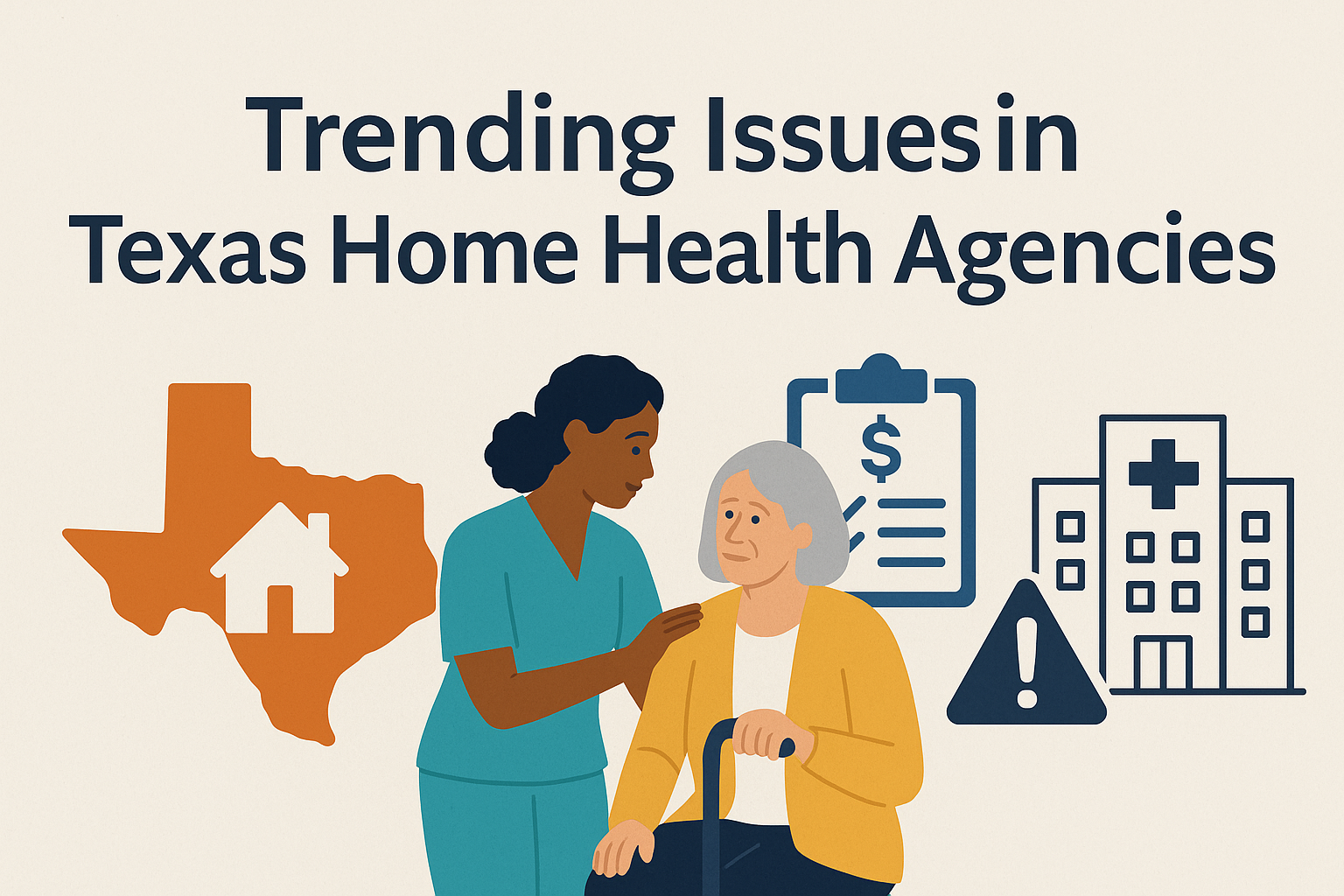
The home-health space in Texas is under significant pressure — driven by demographic shifts, workforce dynamics, regulatory evolution, and financial stressors. For agencies operating in the Lone Star State, understanding the landscape is crucial to staying viable and delivering quality care.
Workforce Shortages & Wage Pressure
Texas continues to face deep workforce shortages. Recruiting, retaining, and properly compensating caregivers and skilled home-health staff remains a major challenge. Workforce shortages are affecting most U.S. home-care agencies, with nearly 59% reporting severe staffing gaps (NCHStats, 2024). Texas wage floor increases for Medicaid-funded care rose to approximately $13/hour in 2025, adding financial strain to agencies whose reimbursement rates have not kept pace (CareSmartz, 2024).
Reimbursement & Payment Rate Pressure
Medicaid reimbursement constraints remain a top concern. States nationwide are raising home- and community-based service payment rates, yet many still lag behind rising labor and compliance costs (KFF, 2024). The shift toward value-based outcomes continues, pushing agencies to achieve higher patient satisfaction, reduced rehospitalization, and improved functional outcomes.
Care Coordination, Quality & Fragmentation of Care
Texas struggles with fragmented transitions between hospitals and home-health providers. Data silos and breakdowns in communication contribute to higher readmission rates and poorer quality outcomes (Texas Hospital Association, 2024). National research indicates agency ownership changes can also negatively impact quality due to staffing reductions (JAMA Health Forum, 2024).
Regulatory & Compliance Pressures
Agencies face increasing regulatory scrutiny. Compliance with HHSC, Medicare, Medicaid, EVV, and quality reporting demands place a heavy burden on small- and mid-sized agencies. Texas administrative code requirements are among the most detailed nationwide (CareSmartz, 2024).
Geography, Access & Rural Challenges
Texas’ vast geography creates unique rural service barriers. Travel time, limited caregiver availability, and sparse healthcare infrastructure persistently hinder service delivery in remote counties.
Conclusion
Texas offers both opportunity and complexity in the home-health landscape. Agencies that strengthen workforce pipelines, modernize systems, leverage data, build hospital partnerships, and prepare early for regulatory changes will be better positioned for long-term success.
References
NCHStats. (2024). U.S. Home Care Industry Statistics.
CareSmartz. (2024). Texas Home Care Industry Updates and HB 2938 Analysis.
Kaiser Family Foundation (KFF). (2024). Medicaid Payment Rates for Home and Community-Based Services.
Texas Hospital Association (THA). (2024). Post-Acute Care Coordination Challenges in Texas.
JAMA Health Forum. (2024). Ownership Changes and Quality Outcomes in Home Health Agencies.

The body content of your post goes here. To edit this text, click on it and delete this default text and start typing your own or paste your own from a different source.
Add a blog and update it regularly. It's a great way to stay in touch with site visitors.
Add a blog and update it regularly. It's a great way to stay in touch with site visitors.